How do Leaves of Plants help in Excretion ?
Excretion is the removal of waste from the body.
5 Important Role of Leaves in Excretion of Plants Explained with examples.
CBSE Class Notes Online – Classnotes123
CBSE Class Notes, Worksheets, Question Answers, Diagrams , Definitions , Diffrence between , Maths Concepts, Science Facts Online – Classnotes123
Excretion is the removal of waste from the body.
5 Important Role of Leaves in Excretion of Plants Explained with examples.
4 Important Methods used by Plants to Get Rid of Excretory Products
Gaseous Waste Products
Liquid Waste Products
Solid Waste Products
Other Useful Plant Wastes
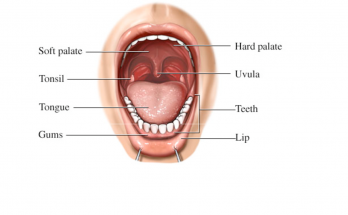
The mouth is the first part of the digestive system through which food enters the body and the process of digestion begins. The teeth and tongue helps to break down the food into smaller pieces, making it easier for the digestive enzymes to work. The Saliva produced in the mouth contains an enzyme called amylase, which helps to break down starch into simple sugars. The tongue also helps to mix the food with the saliva, which is essential for digestion.
Explain the Role of Mouth in Digestion of Food Read More
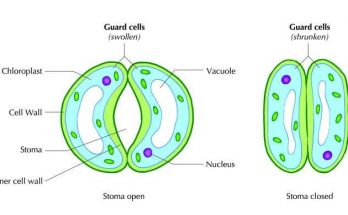
Guard cells surround the stomata on the underside of leaves and regulate the gas exchange necessary for photosynthesis. They change shape to open and close the tiny pores. The stomata close when it is dark or the water level is low, while they open when there is plenty of light and water. Two theories, the potassium ion concentration theory and the sugar concentration theory, explain how the guard cells regulate the opening and closing of the stomata pores.
How do the Guard cells Regulate Opening and Closing of Stomatal Pores Read More
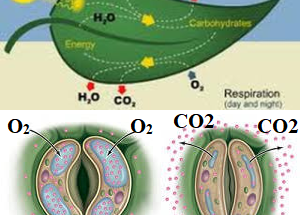
Respiration in Plants Explained with Diagram for class 10th with Location Of Respiration in Various parts of plants , Exchange of Gasses In Plants.
Respiration in Plants Class 10 Read More
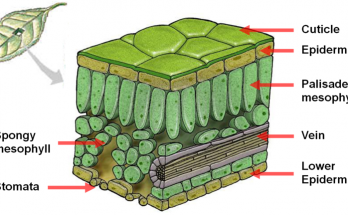
Cross Section of Leaf Explained with neatly labelled Diagrams , explanation of all the layers of leaf , parts and their functions for class 10th
Cross Section of Leaf Class 10 Read More
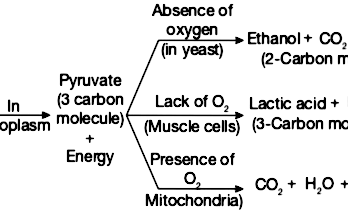
9 Important Diffrences Between Aerobic and Anaerobic Respiration explained with examples and anaerobic and Aerobic Equations
Differentiate Between Aerobic and Anaerobic Respiration Read MoreNeatly Labelled Easy to Draw Human Alimentary Canal Diagram for class 10thwith the explanation of each part of human digestive system
Human Alimentary Canal Diagram Class 10 Read More
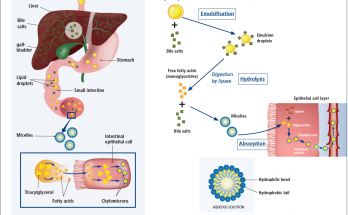
Emulsification of fats is a significant process in our body, in which large fat globules are broken down into small, evenly distributed fat particles by the action of the bile salts present in bile juice. This process increases the efficiency of fat-digesting enzymes, aids in the digestion and absorption of fats, and provides a larger surface area for enzymes to act upon. Overall, the significance of emulsification is crucial for proper fat digestion and absorption in the body.
What is the Significance of Emulsification of Fats Read More
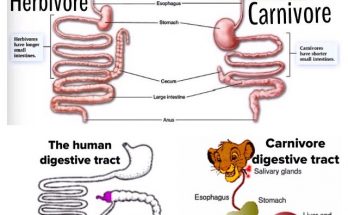
Herbivores and omnivores have longer digestive tracts than carnivores. Herbivores consume fibre-rich plants with cellulose, requiring extended digestion time. A longer small intestine allows herbivores to fully break down cellulose, aided by bacteria. Carnivores lack cellulase enzymes, resulting in a shorter small intestine. The difference in tract length arises from dietary needs and cellulose digestion capabilities.
Why do Herbivores have Longer Small Intestine than Carnivores Read More