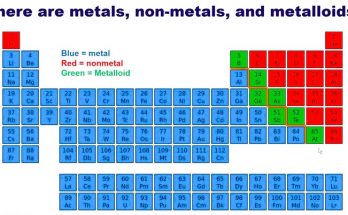
Modern periodic table of chemical elements with clear labels for metals, nonmetals, and metalloids, optimized for student learning.

What Are Chemical Elements? A Complete Guide for Students

Chemical elements are the basic building blocks of all matter. This guide explains atoms, elements, and the periodic table in simple terms for students. Learn how elements combine to form compounds, how they appear in nature, and how stars create them. Ideal for high school learners exploring chemistry fundamentals and real-life applications of science.

What Are Chemical Elements? A Complete Guide for Students Read More
What Are Transition Elements? Properties, Periodic Table Location, and Atomisation Enthalpy

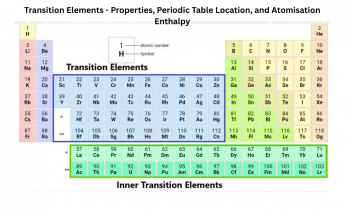
Transition elements, or d-block metals (Groups 3–12), feature partially filled d-orbitals and exhibit unique properties such as variable oxidation states, colored compounds, and catalytic activity. Located centrally on the periodic table, they have high atomisation enthalpy due to strong metallic bonding and unpaired d-electrons. Inner transition elements include lanthanides and actinides with f-orbitals.

What Are Transition Elements? Properties, Periodic Table Location, and Atomisation Enthalpy Read More

Nuclear Transmutation: How Elements Change in Nature and Science

Nuclear transmutation changes one element or isotope into another by altering protons or neutrons. It occurs naturally (e.g., in stars, radioactive decay) or artificially (e.g., in reactors, particle accelerators). This process is key to element formation, medical isotope production, nuclear energy, and waste reduction. While gold can be transmuted, it’s economically unfeasible.

Nuclear Transmutation: How Elements Change in Nature and Science Read More

What Are Elements, Compounds, and Mixtures? Key Differences and Examples

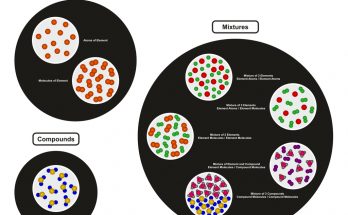
Matter is the substance that forms everything around us. It can be classified into elements, compounds, and mixtures. Elements contain only one type of atom, compounds are chemically bonded atoms in fixed ratios and mixtures are physical combinations of substances. These forms are fundamental in chemistry, as it reveals how substances interact.

What Are Elements, Compounds, and Mixtures? Key Differences and Examples Read More

Solute, Solvent and Solution- Definition, Difference between, Characteristics, Examples

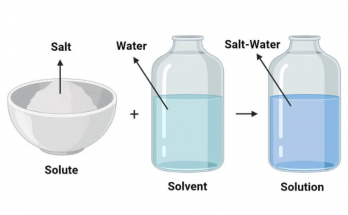
A solution is a homogeneous mixture of solute and solvent. Solutes dissolve in solvents without settling, forming a single-phase system. Solvents determine the solution’s state and aid dispersion. Solubility depends on factors like temperature, pressure, and polarity. Types of solutions and solvents vary by state and composition. Examples include saltwater, soda, alloys, and perfumes.

Solute, Solvent and Solution- Definition, Difference between, Characteristics, Examples Read More

Chapter 2: Is Matter Around Us Pure?-Class 9 – Simplified notes

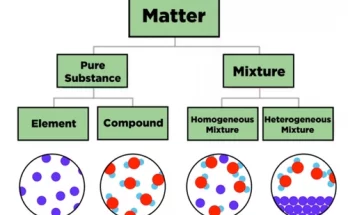
Matter around us is mostly mixtures, not pure substances. Mixtures can be homogeneous or heterogeneous. Solutions, suspensions, and colloids differ in properties. Pure substances include elements and compounds, with fixed composition and characteristics. Physical and chemical changes alter matter differently. Separation methods help isolate components in mixtures, highlighting the difference between mixtures and pure substances.

Chapter 2: Is Matter Around Us Pure?-Class 9 – Simplified notes Read More

Chemical Effects of Electric Current Class 8 – Simplified Detailed Notes

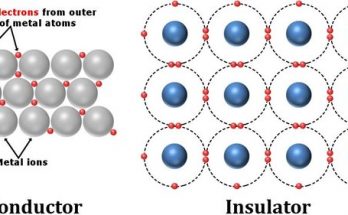
This detailed notes explains the chemical effects of electric current for Class 8 students. It covers conductors, insulators, liquid conductivity, and the effects of electricity such as heating, magnetic, and chemical reactions. The notes also include real-life examples, practical experiments, and safety tips to enhance understanding.

Chemical Effects of Electric Current Class 8 – Simplified Detailed Notes Read More

Plasmids – Structural Details, Functional Roles, and Applications in Genetic Engineering

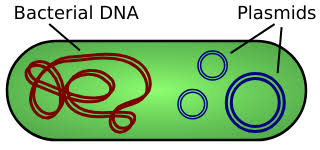
Plasmids are small, circular DNA molecules found in bacteria, separate from chromosomal DNA. They have unique features such as antibiotic resistance and toxin production. Plasmids come in various types like F-plasmids, R-plasmids, and Col plasmids. They replicate independently and facilitate gene transfer through conjugation. Plasmids are also key in genetic engineering and biotechnology.

Plasmids – Structural Details, Functional Roles, and Applications in Genetic Engineering Read More

8 Key Differences Between Plasmid DNA and Chromosomal DNA

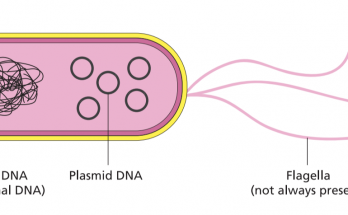
Plasmid DNA is extrachromosomal, found only in prokaryotes, and can replicate independently. It’s small, circular, and carries non-essential genes, often used in recombinant DNA technology. In contrast, chromosomal DNA forms the main genetic material in both prokaryotes and eukaryotes, is essential for development and reproduction, and varies in shape and size. It replicates with the genome and is transferred through cell division.

8 Key Differences Between Plasmid DNA and Chromosomal DNA Read More