Gastric Glands - Location , Structure, Types, Secretion and Functions

Gastric Glands – Location , Structure, Types, Secretion and Functions

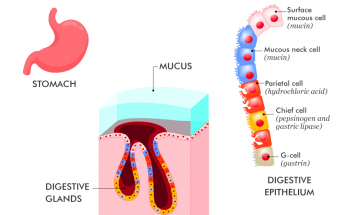
Gastric glands, present in the stomach lining, play an important role in digestion. Structurally, they are made up of different cell types, including parietal, chief, and mucous cells. These glands secrete gastric juice, which consists of hydrochloric acid, pepsinogen and mucus. The secretions help break down food, sterilisation of ingested pathogens and absorb essential nutrients, thus fulfilling important functions in the digestive process

Gastric Glands – Location , Structure, Types, Secretion and Functions Read More
peristalsis / perstaltic movement

Peristalsis-  The Rhythmic Journey Through Your Body

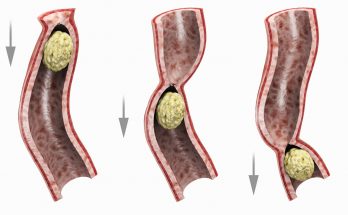
Peristalsis is a vital biological process that facilitates the movement of food through the digestive system. It involves rhythmic contractions of smooth muscles, creating a wave-like motion known as peristaltic waves. These waves propel food through the digestive tract and ensure efficient digestion and absorption of nutrients. Peristaltic movements are coordinated by the enteric nervous system and provide the motility necessary for proper gastrointestinal function.

Peristalsis-  The Rhythmic Journey Through Your Body Read More
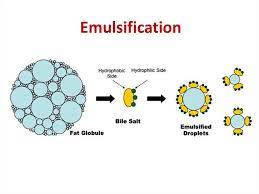
emulsification of fats in digestion

Emulsification of Fats

Emulsification of fats is an important process in digestion in which large globules of fat are broken down into smaller droplets. This process is carried out by bile, a substance produced by the liver and stored in the gallbladder. Bile emulsifies fats by acting as a detergent, breaking down the fat into smaller droplets that can be easily digested and absorbed by the body. Without this process, the digestion and absorption of fats would be much less efficient.

Emulsification of Fats Read More
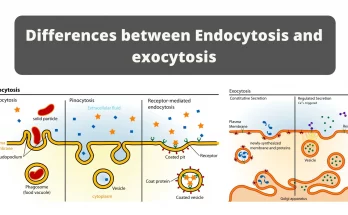
Endocytosis and Exocytosis - Differences , Similarities ,Roles, Steps , Types

Endocytosis and Exocytosis – Differences , Similarities ,Roles, Steps , Types

Endocytosis and Exocytosis are cellular processes used to move molecules in and out of cells, respectively. Endocytosis involves the formation of a vesicle to engulf and transport molecules into the cell, while exocytosis involves the fusion of a vesicle with the plasma membrane to release molecules out of the cell. These processes play important roles in nutrient uptake, waste elimination, cell communication etc.

Endocytosis and Exocytosis – Differences , Similarities ,Roles, Steps , Types Read More

Amoeba Diagram for Class 7

The Amoeba is a single-celled organism of Protozoa phylum.It is a type of unicellular Protist that can be found in a variety of environments. The amoeba diagram is a simple and easy-to-draw representation of this organism, neatly labeled to help students in class 7 understand its structure. The essential features of the amoeba diagram comprise the pseudopod, cytoplasm, food vacuole, nucleus and other parts.

Amoeba Diagram for Class 7 Read More

What is Endocytosis – Class 9

Endocytosis allows cells to take in external materials by forming vesicles that fuse with the cell membrane. This process is vital for nutrient uptake and immune function. There are three steps and three types of Endocytosis. Phagocytosis engulfs particles, while Pinocytosis takes up fluids and solutes. Receptor-Mediated Endocytosis uses specific receptors to target and internalise molecules.

What is Endocytosis – Class 9 Read More
What is Endocytosis

Endocytosis -Definition, Mechanism, Types, Examples

Endocytosis is a cellular process by which cells absorb molecules and particles from the external environment by engulfing them within a vesicle. There are three main types of endocytosis – phagocytosis, pinocytosis, and receptor-mediated endocytosis. Endocytosis plays a crucial role in nutrient uptake, immune defence and cellular signalling. Examples of endocytosis include the uptake of bacteria by immune cells and the absorption of nutrients by intestinal cells.

Endocytosis -Definition, Mechanism, Types, Examples Read More

Human Circulatory System

The human circulatory system is responsible for delivering oxygen, nutrients, and hormones to cells and tissues throughout the body. It consists of the heart, blood vessels and blood. The heart pumps oxygenated blood to the body through arteries and the deoxygenated blood returns to the heart through veins. The circulatory system also helps remove waste products from cells and helps regulate body temperature.

Human Circulatory System Read More

Parts of Leaf – Structure, Types How Leaves Work , Function and Diagram

Leaves are an important part of plants. They come in different shapes and sizes, but all leaves have similar parts. The flat, green part of the leaf is called the blade and the stalk that attaches it to the stem is called the petiole. Leaves have tiny openings called stomata, which let in carbon dioxide and release oxygen. Leaves use sunlight to make food for the plant through a process called Photosynthesis.

Parts of Leaf – Structure, Types How Leaves Work , Function and Diagram Read More