Amoeba Diagram for Class 7

The Amoeba is a single-celled organism of Protozoa phylum.It is a type of unicellular Protist that can be found in a variety of environments. The amoeba diagram is a simple and easy-to-draw representation of this organism, neatly labeled to help students in class 7 understand its structure. The essential features of the amoeba diagram comprise the pseudopod, cytoplasm, food vacuole, nucleus and other parts.

Amoeba Diagram for Class 7 Read More
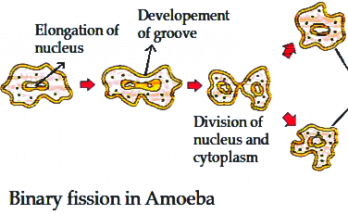
Binary Fission in Amoeba - 4 important steps

Binary Fission in Amoeba

Binary fission is the primary mode of reproduction in Amoeba, a unicellular organism. It is a simple asexual process where the parent cell divides into two identical daughter cells. In the first step the cell elongates and then the nucleus divides into two. This is followed by the division of the cytoplasm resulting in two new Amoebas. Binary fission in Amoeba is a crucial process that allows them to rapidly multiply and colonise new habitats.

Binary Fission in Amoeba Read More

Human Circulatory System

The human circulatory system is responsible for delivering oxygen, nutrients, and hormones to cells and tissues throughout the body. It consists of the heart, blood vessels and blood. The heart pumps oxygenated blood to the body through arteries and the deoxygenated blood returns to the heart through veins. The circulatory system also helps remove waste products from cells and helps regulate body temperature.

Human Circulatory System Read More

Transverse Section of Leaf

The transverse section of a leaf is a cross-sectional view revealing the internal structure and organisation of cells, which is critical for understanding functions and adaptations.Leaf has several layers – the upper and lower epidermis, palisade and spongy parenchyma and vascular bundles. Stomata and air spaces regulate gas exchange, while xylem and phloem transport water, minerals, and nutrients.

Transverse Section of Leaf Read More
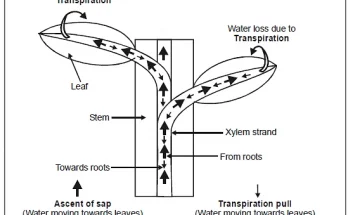
Ascent of Sap- explained in details

Ascent of Sap

The Ascent of Sap is the movement of water through the Xylem vessels from the roots to the leaves. It is essential for various processes such as photosynthesis, transpiration and respiration. The cohesion-tension theory is widely accepted to explain the mechanism of the Ascent of Sap, where water moves up through the Xylem vessels due to a combination of transpiration and cohesive forces. Factors such as temperature, humidity, and wind affects Ascent of Sap

Ascent of Sap Read More
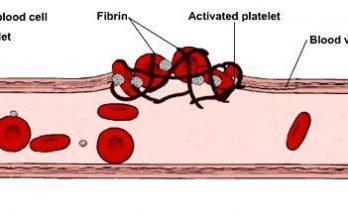
blood coagulation - blood clotting

Blood Coagulation (Blood Clotting)

Blood coagulation or blood clotting is a complex process that prevents excessive bleeding after an injury. It involves platelets, clotting factors, fibrin, and endothelial cells and occurs in a series of steps including vasoconstriction, platelet activation, the coagulation cascade, clot retraction and fibrinolysis. There are many clotting factors involved in coagulation. Disruptions to any of them can lead to bleeding disorders or unwanted blood clots.

Blood Coagulation (Blood Clotting) Read More

Xylem Diagram

A neatly labeled xylem diagram to understand xylem tissue. Xylem consists of vessel elements, tracheids, fibers and parenchyma cells each with unique functions in water and nutrient transport and structural support. Important features such as cytoplasm, the nucleus and bordered and simple pits are also shown in the diagram. Students can use this easy-to-draw diagram for their assignments and exams.

Xylem Diagram Read More

Components of Xylem

Xylem is a vital plant tissue responsible for the transport of water and nutrients from the roots to the leaves. It is made up of several components, including tracheids, vessel elements, fibers and parenchyma cells. Tracheids and vessel elements form long tubes that allow for efficient water transport, while fibers provide structural support. Parenchyma cells help with storage and metabolic functions.

Components of Xylem Read More