What is Endocytosis

Endocytosis -Definition, Mechanism, Types, Examples

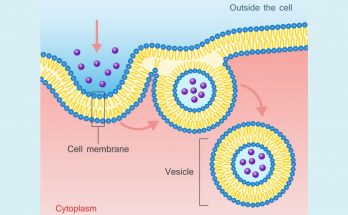
Endocytosis is a cellular process by which cells absorb molecules and particles from the external environment by engulfing them within a vesicle. There are three main types of endocytosis – phagocytosis, pinocytosis, and receptor-mediated endocytosis. Endocytosis plays a crucial role in nutrient uptake, immune defence and cellular signalling. Examples of endocytosis include the uptake of bacteria by immune cells and the absorption of nutrients by intestinal cells.

Endocytosis -Definition, Mechanism, Types, Examples Read More
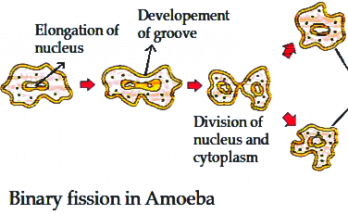
Binary Fission in Amoeba - 4 important steps

Binary Fission in Amoeba

Binary fission is the primary mode of reproduction in Amoeba, a unicellular organism. It is a simple asexual process where the parent cell divides into two identical daughter cells. In the first step the cell elongates and then the nucleus divides into two. This is followed by the division of the cytoplasm resulting in two new Amoebas. Binary fission in Amoeba is a crucial process that allows them to rapidly multiply and colonise new habitats.

Binary Fission in Amoeba Read More

Human Circulatory System

The human circulatory system is responsible for delivering oxygen, nutrients, and hormones to cells and tissues throughout the body. It consists of the heart, blood vessels and blood. The heart pumps oxygenated blood to the body through arteries and the deoxygenated blood returns to the heart through veins. The circulatory system also helps remove waste products from cells and helps regulate body temperature.

Human Circulatory System Read More
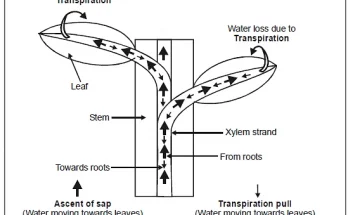
Ascent of Sap- explained in details

Ascent of Sap

The Ascent of Sap is the movement of water through the Xylem vessels from the roots to the leaves. It is essential for various processes such as photosynthesis, transpiration and respiration. The cohesion-tension theory is widely accepted to explain the mechanism of the Ascent of Sap, where water moves up through the Xylem vessels due to a combination of transpiration and cohesive forces. Factors such as temperature, humidity, and wind affects Ascent of Sap

Ascent of Sap Read More

Components of Xylem

Xylem is a vital plant tissue responsible for the transport of water and nutrients from the roots to the leaves. It is made up of several components, including tracheids, vessel elements, fibers and parenchyma cells. Tracheids and vessel elements form long tubes that allow for efficient water transport, while fibers provide structural support. Parenchyma cells help with storage and metabolic functions.

Components of Xylem Read More
Difference between Xylem and Phloem - explained in details in tabular format

15 Difference between Xylem and Phloem

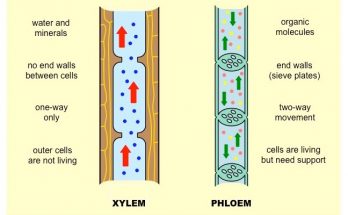
Xylem and phloem are vital plant tissues with different tasks. Xylem transports water and nutrients upwards from the roots, while the phloem transports sugars from the leaves to other parts of the plant. Their composition, flow direction, location, transport mechanism, speed of movement, response to injury, fibres, distribution, movements and roles within plants provide fascinating insights.

15 Difference between Xylem and Phloem Read More

Phloem – Definition, Structure, Function, Types and How does Phloem tissue work

Phloem tissue is a type of vascular tissue in plants that transports sugars, amino acids, hormones and other organic compounds from the leaves to the rest of the plant. The tissue is made up of several different types of cells like sieve tube elements, companion cells, phloem parenchyma and phloem fibers. Phloem tissue plays a critical role in plant growth and development by facilitating the transport of hormones, defending against pathogens, transmitting signals and storing nutrients. There are two types of phloem tissue- primary phloem and secondary phloem.

Phloem – Definition, Structure, Function, Types and How does Phloem tissue work Read More

Phloem Diagram – Longitudinal and Transverse Section Diagram of Phloem Tissue

The Phloem is a plant tissue responsible for translocating organic nutrients and other substances from leaves to other parts of the plant. Longitudinal and Transverse Phloem Diagrams show the internal structure of the tissue, including Sieve tubes, Companion Cells, Phloem Fibers and Phloem Parenchyma cells.Netaly labelled easy to draw Phloem Diagram – Longitudinal and Transverse Section Diagram of Phloem Tissue explained with description of Labels

Phloem Diagram – Longitudinal and Transverse Section Diagram of Phloem Tissue Read More
Systolic and Diastolic Blood Pressure

What’s Systolic and Diastolic Blood Pressure?

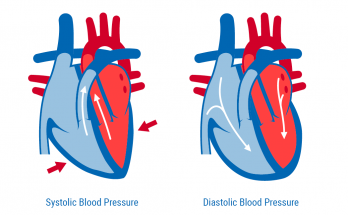
Blood pressure is a vital sign that reflects the pressure of blood against the walls of arteries. Systolic blood pressure is the pressure in the arteries when the heart contracts and pumps blood out into the body, while diastolic blood pressure is the pressure in the arteries when the heart is at rest between beats. This article will provide an in-depth look at the differences between systolic and diastolic blood pressure, and why they are important .

What’s Systolic and Diastolic Blood Pressure? Read More
Heart Valves- Types, Location, Structure and Functions

Heart Valves- Types, Location, Structure and Functions

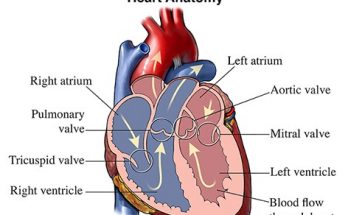
The human Heart has four chambers, and four valves ensure that blood flows in the correct direction. The valves are made up of thin flaps of tissue that open and close like doors. There are four main types of Heart valves – the Aortic Valve, Mitral Valve, Pulmonary Valve and Tricuspid Valve. Each valve plays a vital role in regulating blood flow in and out of the Heart. Any problems with the valves can lead to a variety of conditions that affect Heart function.

Heart Valves- Types, Location, Structure and Functions Read More