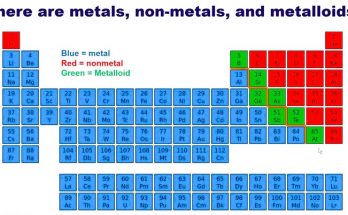
Modern periodic table of chemical elements with clear labels for metals, nonmetals, and metalloids, optimized for student learning.

What Are Chemical Elements? A Complete Guide for Students

Chemical elements are the basic building blocks of all matter. This guide explains atoms, elements, and the periodic table in simple terms for students. Learn how elements combine to form compounds, how they appear in nature, and how stars create them. Ideal for high school learners exploring chemistry fundamentals and real-life applications of science.

What Are Chemical Elements? A Complete Guide for Students Read More
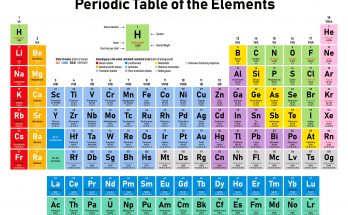
Periodic table of elements chart with atomic number, chemical symbol, element categories, and states of matter in a color-coded format for chemistry learning.

The Periodic Table of Elements: What It Is and How It Works

The periodic table is a scientific chart that organizes elements by atomic number and reveals patterns in chemical behavior. It helps explain how atoms bond, react and form substances. From noble gases to alkali metals, each group shares unique properties, all guided by electron structure-a key to understanding the elements of the universe.

The Periodic Table of Elements: What It Is and How It Works Read More

The Khilafat Movement- Agitation for Ottoman Caliphate’s preservation

The Khilafat Movement (1919-1924) was a pivotal campaign by Indian Muslims to safeguard the Ottoman Caliphate after World War I. It united Hindus and Muslims against British rule, fostering mass protests and political awakening. Despite its eventual decline, the movement influenced future independence efforts and highlighted the potential for communal unity in India.

The Khilafat Movement- Agitation for Ottoman Caliphate’s preservation Read More

The Non-Cooperation Movement – Civil disobedience to end British rule

The Non-Cooperation Movement, led by Gandhi in 1920 aimed for Swaraj and promoted non-violence and Khadi. It united various Indian communities, impacting British economic and political interests. Despite challenges like internal conflicts and British repression, it influenced future freedom struggles, strengthening the Indian National Congress and inspiring movements worldwide with its legacy of non-violence.

The Non-Cooperation Movement – Civil disobedience to end British rule Read More

The Frankfurt Parliament – Class 10

The Frankfurt Parliament, convened amidst the 1848 revolutions, embodied liberal and nationalist aspirations in Germany. Formed to draft a unified German constitution, it faced monarchic opposition and internal divisions. Women’s rights were debated but not implemented. Despite its suppression, its legacy endured, paving the way for future liberal and nationalist movements and Germany’s eventual unification in 1871.

The Frankfurt Parliament – Class 10 Read More

The Rise of Nationalism in Europe- 40 Extra Question Answer

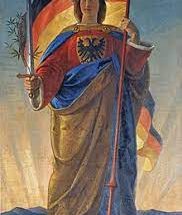
The document contains a comprehensive Q&A section on “The Rise of Nationalism in Europe,” detailing pivotal moments and figures that shaped European nationalism. It explores Sorrieu’s vision, the significance of the German flag, Napoleon’s influence, and the role of the Zollverein, among others, in fostering national unity and identity amidst diverse challenges like political fragmentation and conservative opposition, setting the stage for the unification of nations like Germany and Italy.

The Rise of Nationalism in Europe- 40 Extra Question Answer Read More

Liberalism: Economic, Political and Social Perspectives

Liberalism, rooted in liberty and equality, emerged prominently in early 19th-century Europe post-French Revolution. Advocating for representative government, free markets, and individual freedoms, it intertwined with nationalism. Despite criticisms like limited suffrage and economic inequality, liberalism played a pivotal role in shaping political, economic, and social landscapes across Europe during the 19th century.

Liberalism: Economic, Political and Social Perspectives Read More

The Congress of Vienna – 1815

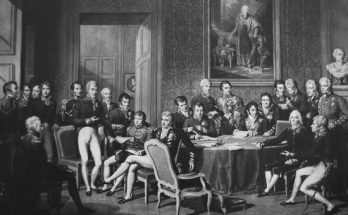
The Congress of Vienna in 1815 aimed to reconstruct Europe after Napoleon’s defeat, prioritising stability. It restored monarchies, balanced power, and promoted conservatism. Key decisions included territorial adjustments and the establishment of buffer states. While it maintained peace for nearly a century, it also fueled future nationalist movements, shaping European history profoundly.

The Congress of Vienna – 1815 Read More

Who was Frédéric Sorrieu?

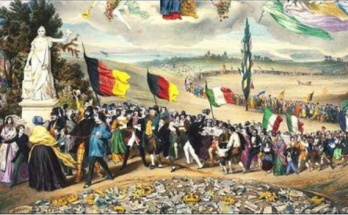
Frédéric Sorrieu, a French artist active in 1848, depicted utopian visions of worldwide democratic republics. His series of prints, “The Dream of Worldwide Democratic and Social Republics,” celebrated national unity, symbolically opposing absolutism. Sorrieu’s legacy lies in his powerful portrayal of liberty and democracy, inspiring aspirations for freedom and national unity in the 19th century.

Who was Frédéric Sorrieu? Read More